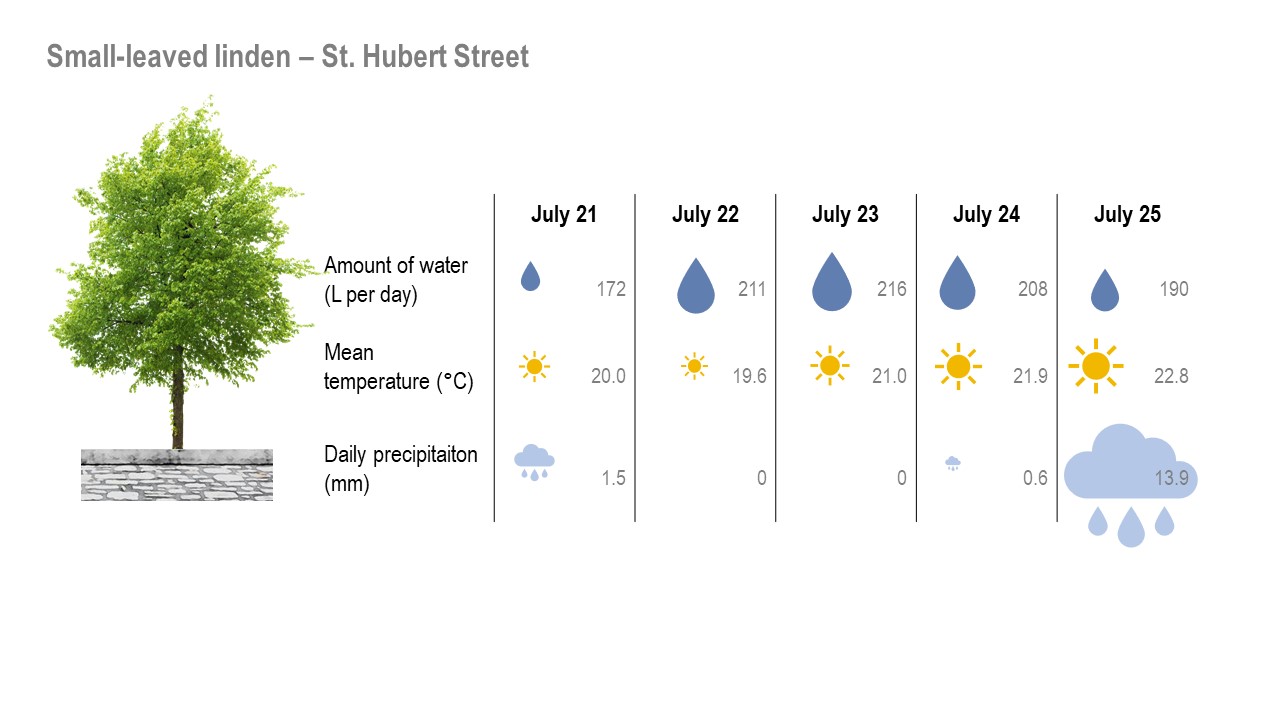
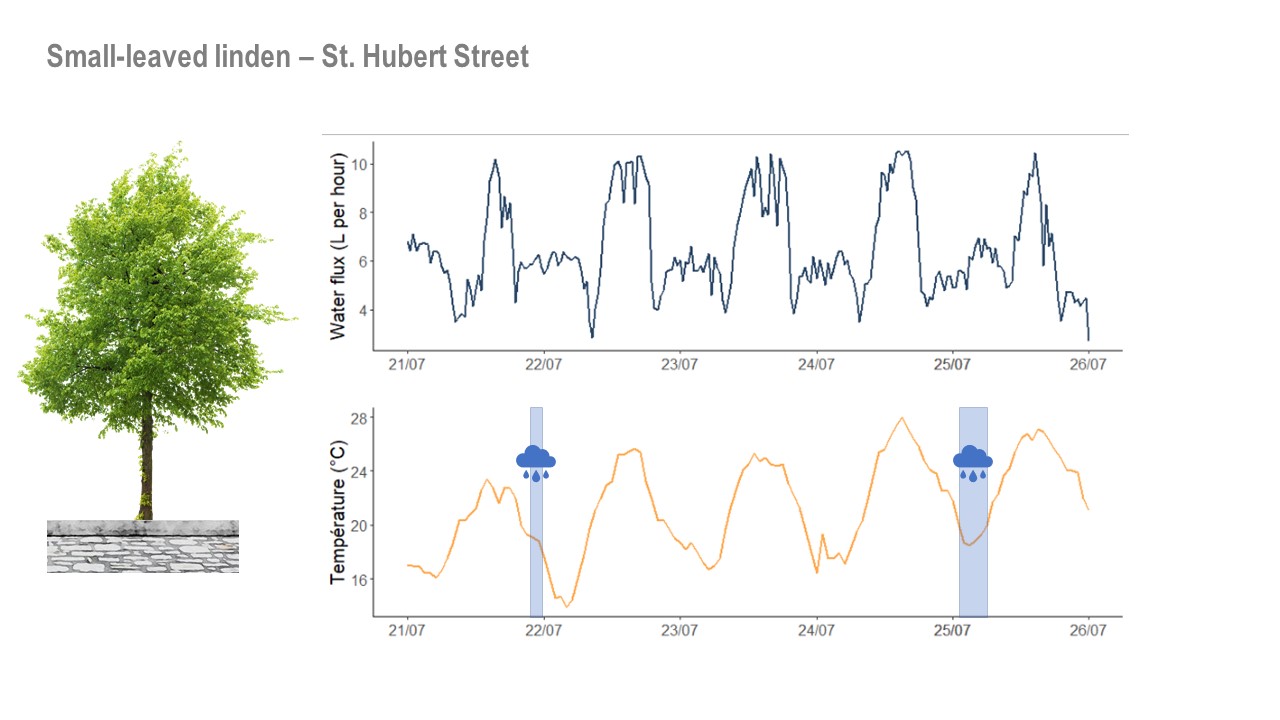
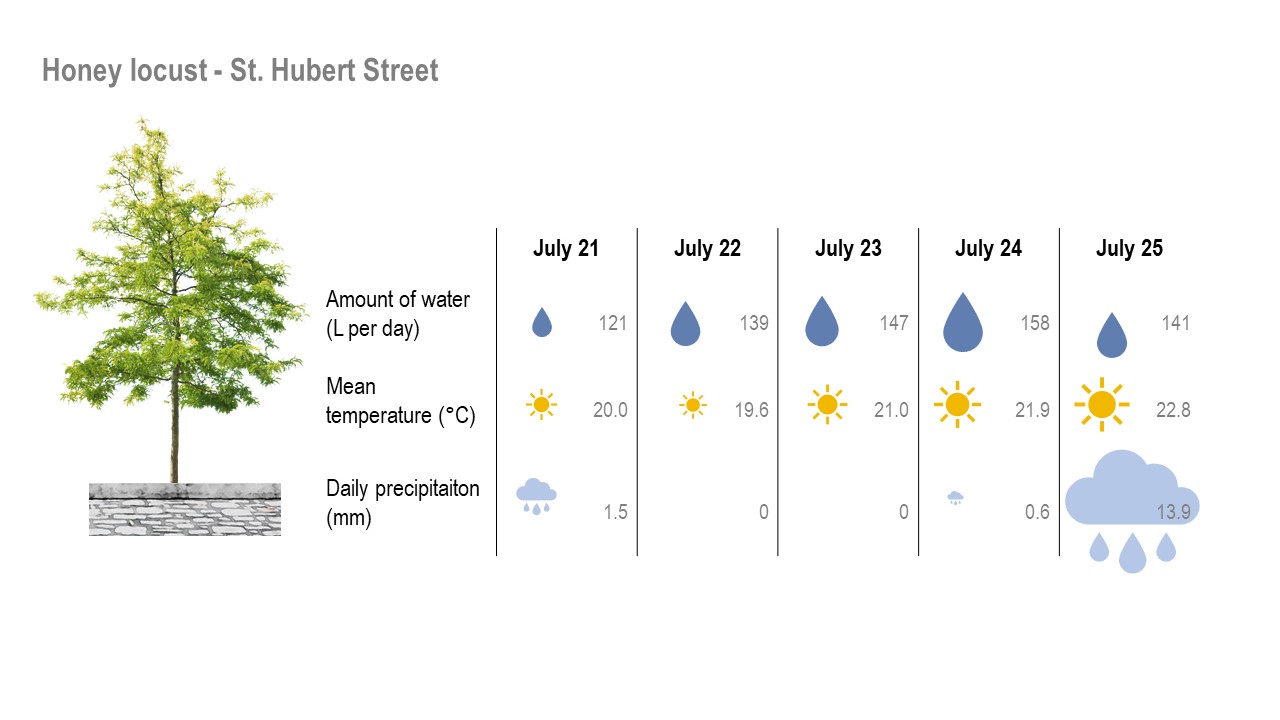
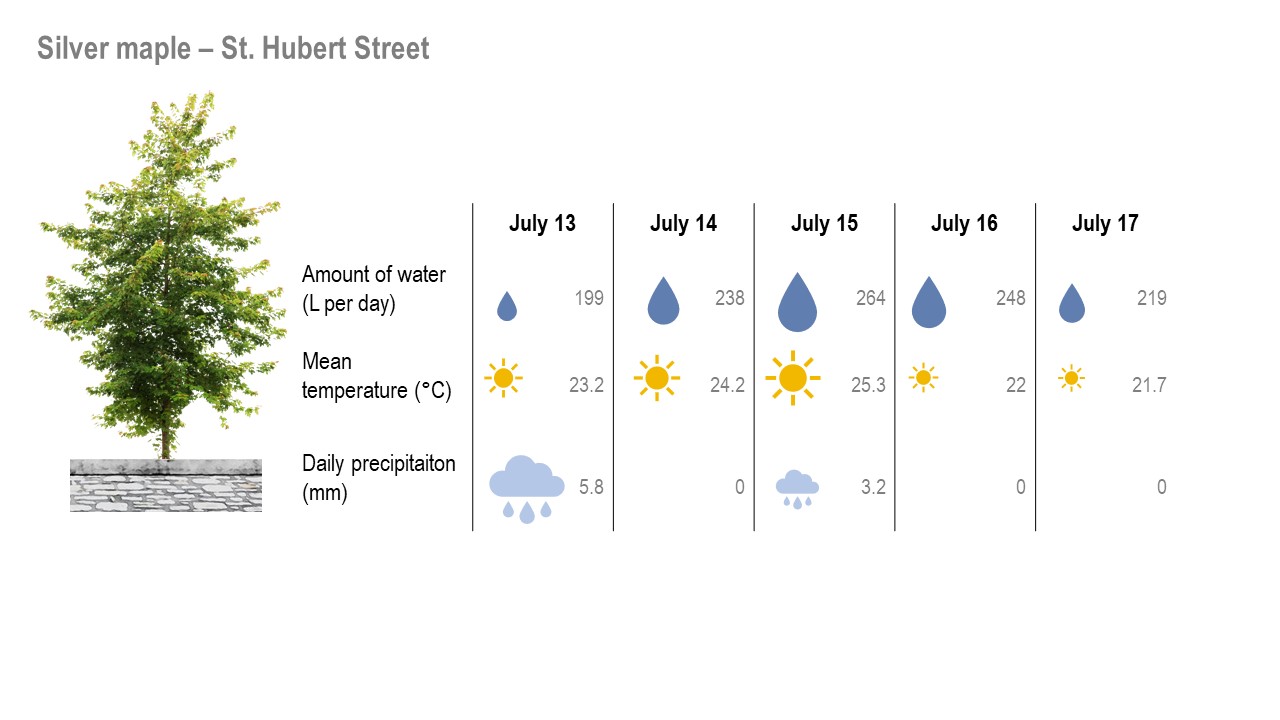
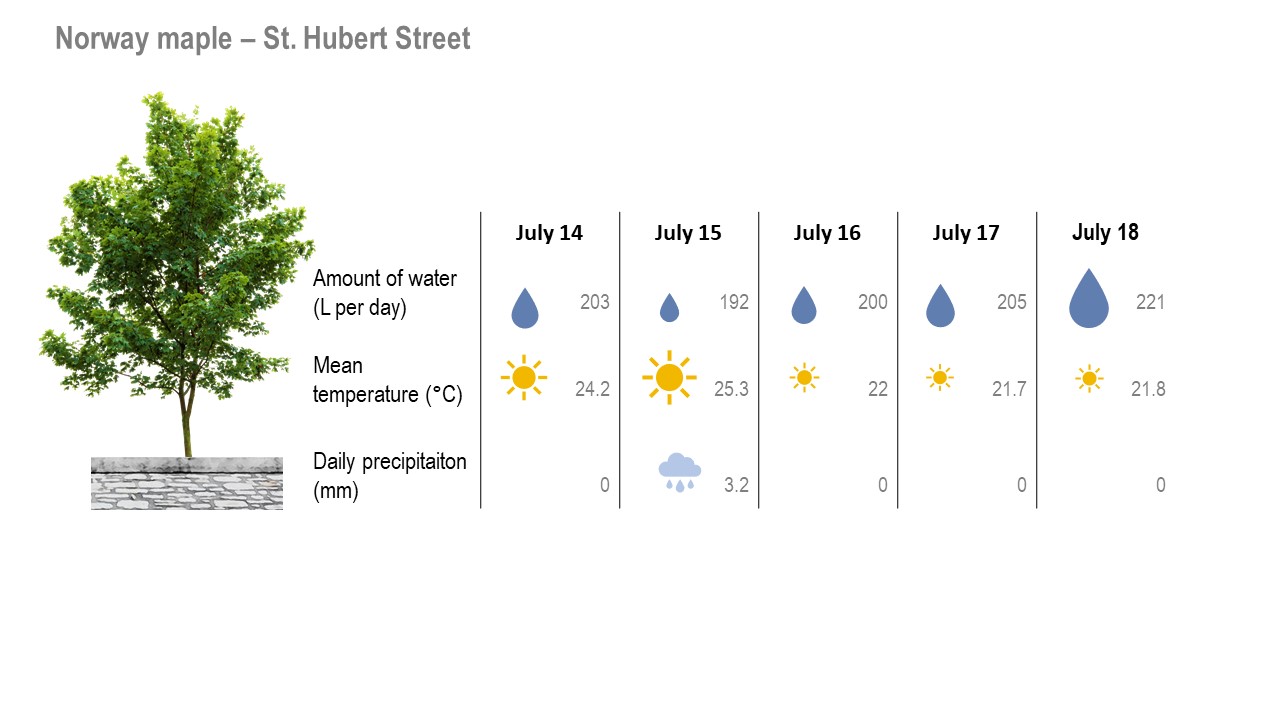
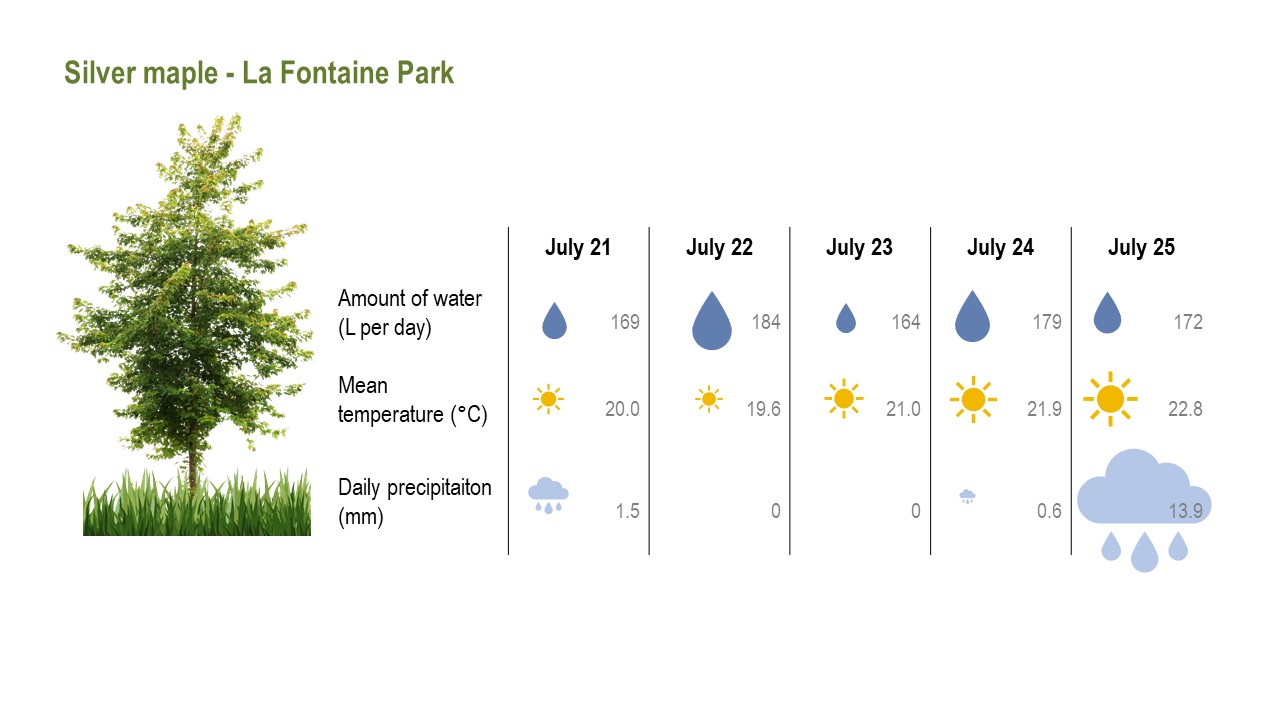
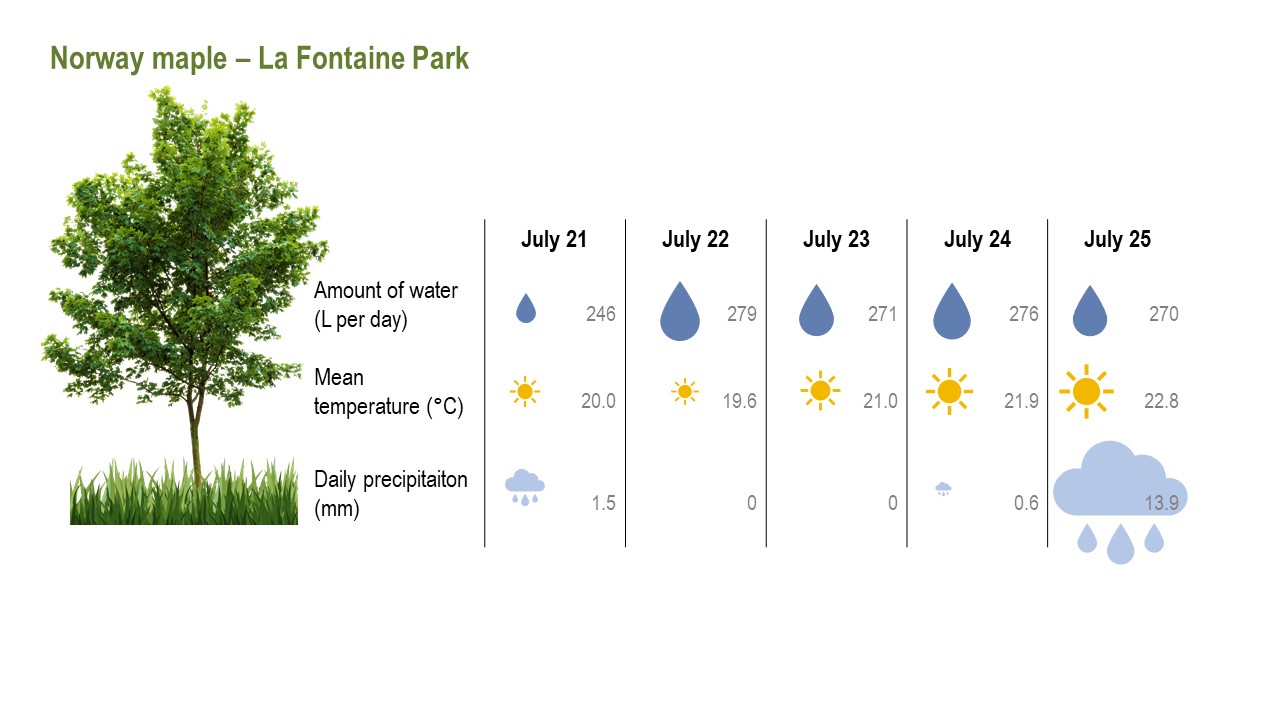
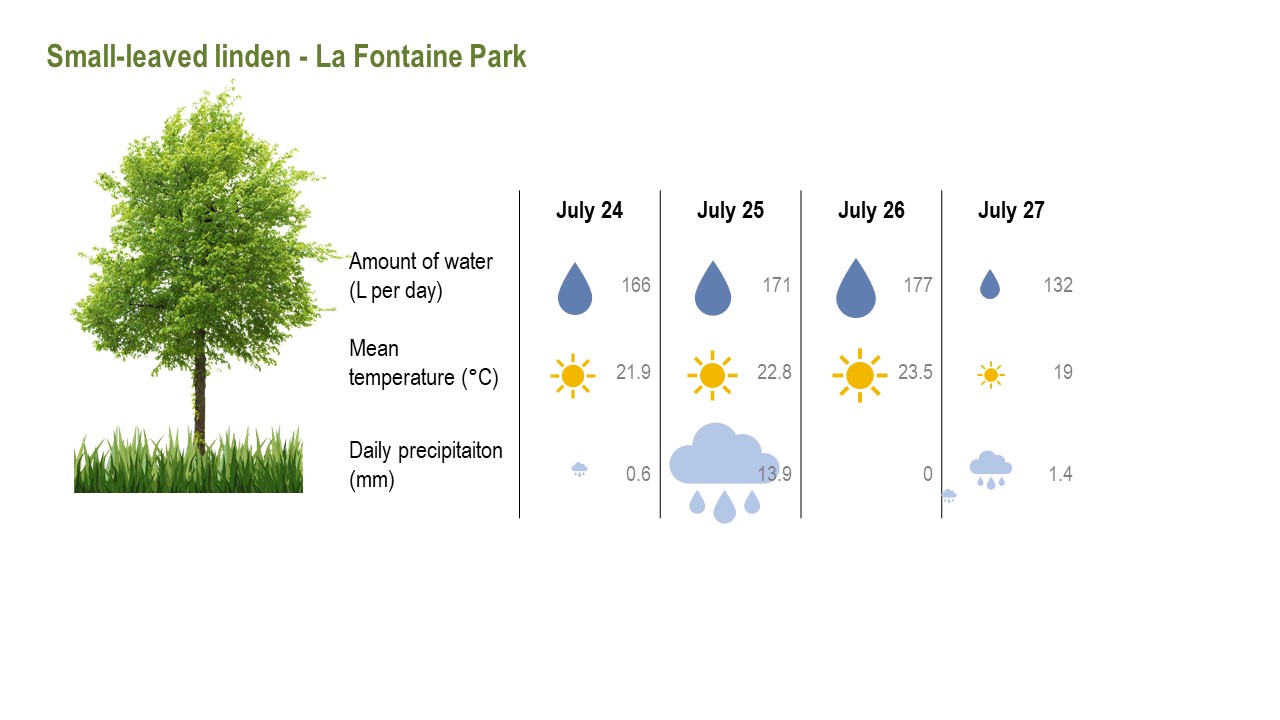
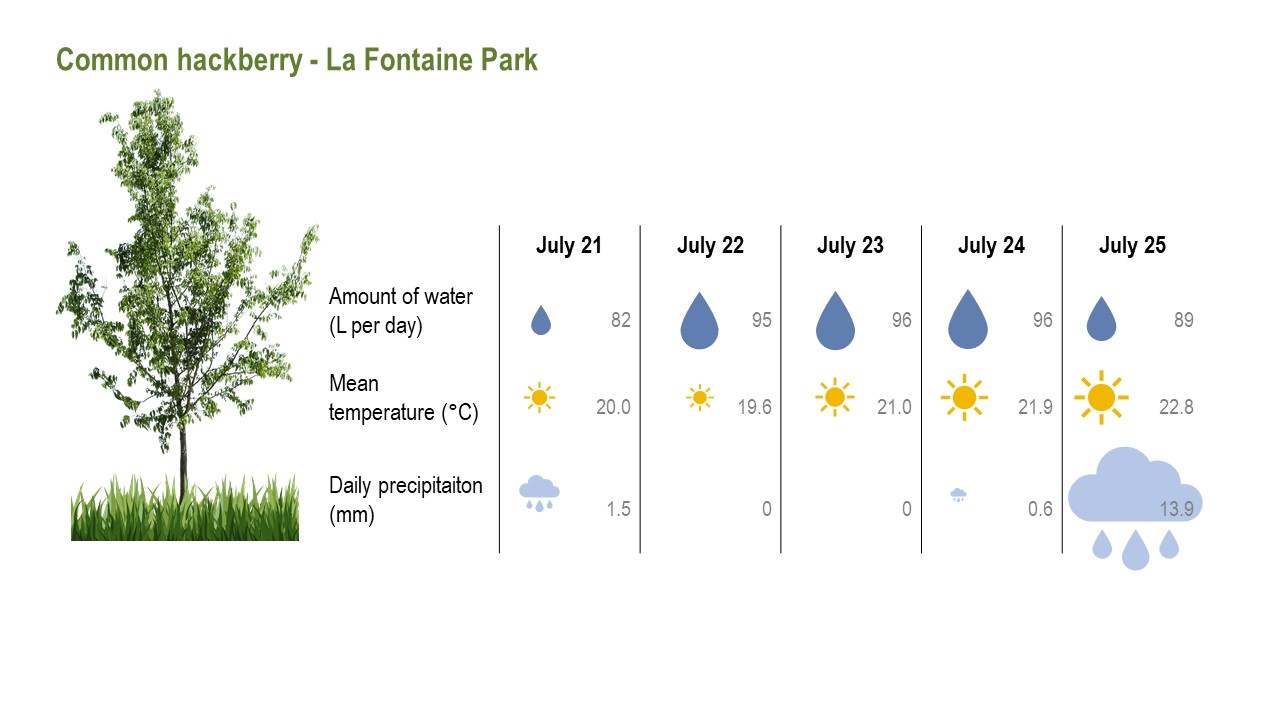
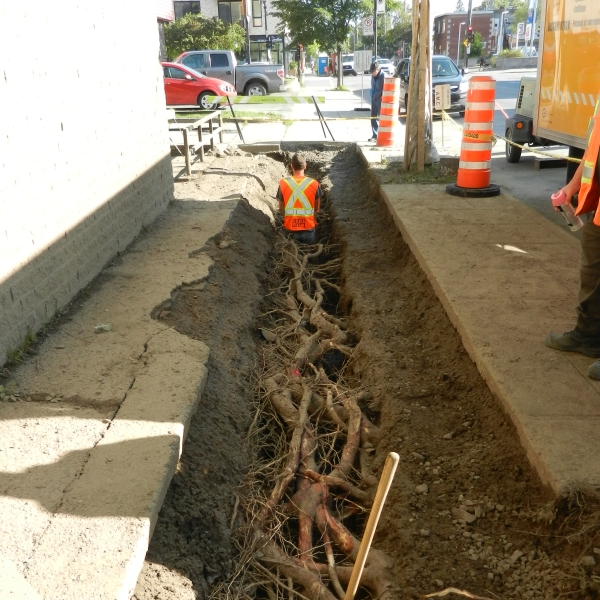
Trees in urban environment experience combinations environmental conditions and stress factors that differ from forests and rural areas. These conditions shape, among other tree functions, the water use of urban trees. For example, urban trees generally live in open environment and they have large canopies, but their roots can be restrained in packed soil. In addition, the trees surrounded by paved surfaces have poor availability of rainwater, but they may access ground water or other stable water sources such as leaking pipes. The water use of trees is linked not only to their growth and capacity to tolerate the urban environment, but also directly to the ecosystem services they offer -cooling and stormwater management by transpiration of water. Using sap flow measurements, we study the water transport patterns of tree species commonly used in urban environment with diverse water-use strategies to quantify their water use in various conditions and scales. Finally, we will apply this information to estimating the effects of environmental conditions on the cooling capacity of urban tree transpiration.